

Daily Commentary
Commentary prepared by Alloya Investment Services, a division of the wholly owned CUSO of Alloya Corporate Federal Credit Union. Alloya Investment Services is a leading broker/dealer consultant to credit unions.
Friday, October 23, 2026 at 7:30 am CT
Commentary prepared by Tom Slefinger, Market Strategist
Market Indications
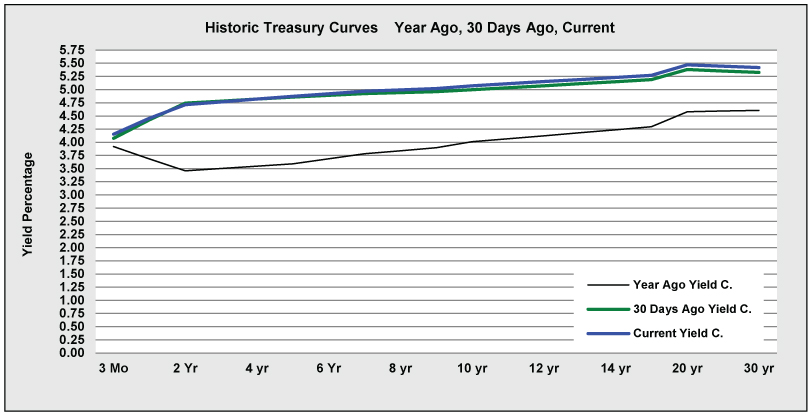
Other Market Indicators
| Market Indicators | ||
|---|---|---|
| 2s/5s Tsy Spread | 0.13 | -0.01 |
| 2s/10s Tsy Spread | 0.31 | -0.01 |
| 2s/30s Tsy Spread | 0.61 | +0.01 |
| DJIA-30 | 52,856.09 | +0.69% |
| S&P-500 | 7,757.17 | +0.58% |
| NASDAQ | 26,792.86 | +1.05% |
| Dollar Idx | 101.67 | -0.10% |
| WTI | 99.47 | +2.35% |
| Gold | 4,073.70 | -1.81% |
Daily Commentary
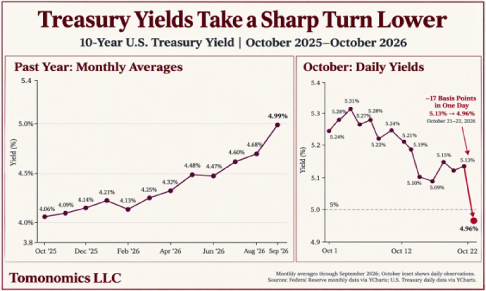
Recap — Yesterday, Treasuries had their best day in more than a year. Yields fell 17 basis points to 4.96%, dropping below 5% for the first time since September 22. Growing doubts about AI returns sent investors looking for safety. That big of a move may also signal concern about where the economy is headed. Even a 2.4% jump in West Texas Intermediate (WTI) oil to $99.47 per barrel couldn’t push yields higher. This time, growth and credit worries outweighed inflation fears.
Meta fell 7% despite glowing earnings headlines. IBM was down as much as 7% during the session after CEO Arvind Krishna said large companies are taking a harder look at what they’re getting for their AI spending. Some of it, he warned, is “completely out of control with no real return.”
His words, not mine.
The semiconductor index fell 6.7% to its lowest level since late July. The Nasdaq 100 dropped 3%, posting its steepest intraday decline since late June.
Markets also trimmed the odds of another Fed hike. October is nearly off the table, with odds below 10%. December odds fell to 80% from 90%.
Overnight, stocks remained under pressure, with U.S. futures modestly lower. WTI rose another 1% to $101.55 per barrel.
Meanwhile, everyone is focused on inflation, but housing tells a different story. The New York Times article “Home Prices Are Starting to Fall in Some Pockets of the U.S.” highlights price declines that have yet to show up in Consumer Price Index shelter readings. Core inflation excluding shelter is already running at 2.0%.
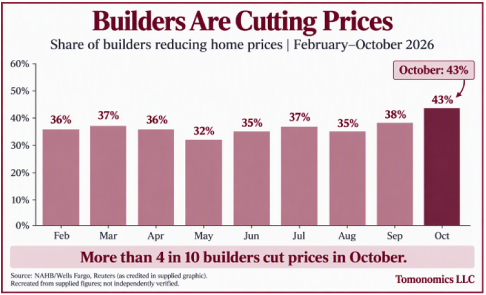
In October, 43% of builders cut prices, which was the highest share since the data began in 2020. The average cut was 6% for the seventh straight month. And price cuts don’t tell the whole story. Another measure shows 65% of builders offering sales incentives. That marks 19 straight months with at least 60% doing so.
Bottom line: Builders are cutting prices and sweetening deals. Housing is weakening, even if the inflation data hasn’t caught up.
Stay tuned and have a great day!
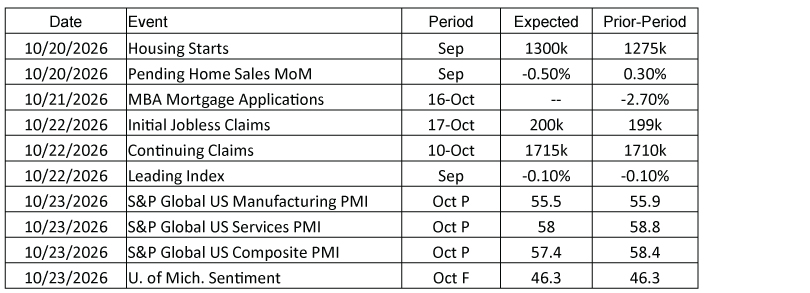
Economic Calendar
October 19-23, 2026
Future Fed Expectations
Source: Bloomberg
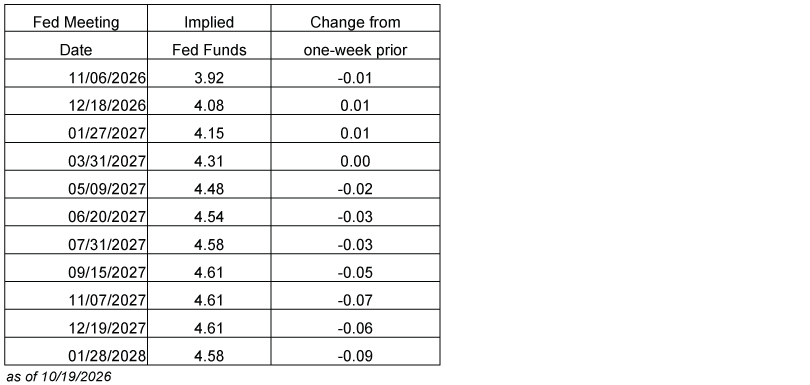
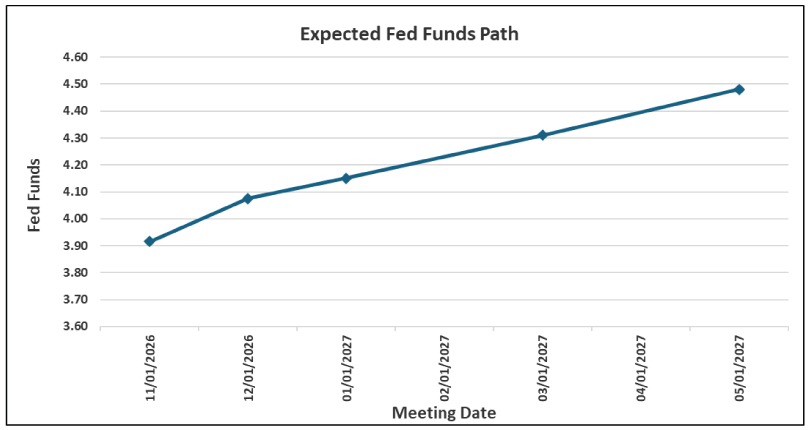
| Select Probabilities based on the Futures | |
|---|---|
| Probability of Fed Funds rate HIKE on October 28, 2026 | 15% |
| Probability of Fed Funds rate HIKE on December 9, 2026 | 88% |
**All quoted rates are indications and are subject to change without notice.
* ISI is a member of the FINRA/SIPC.
The information contained herein is prepared by ISI Registered Representatives for general circulation and is distributed for general information only. This information does not consider the specific investment objectives, financial situations or particular needs of any specific individual or organization that may receive this report. Neither the information nor any opinion expressed constitutes an offer, or an invitation to make an offer, to buy or sell any securities. All opinions, prices, and yields contained herein are subject to change without notice. Investors should understand that statements regarding future prospects might not be realized. Please contact Alloya Investment Services to discuss your specific situation and objectives.